|
|
|
🥘 What's a Frying Pan?
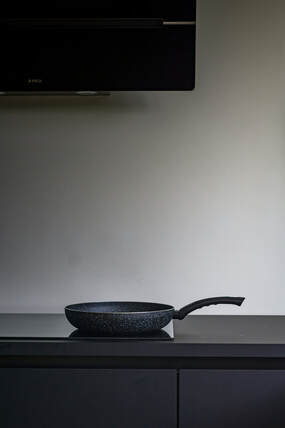
A frying pan (or skillet) is that flat pan you use for frying stuff, searing, and getting food nice and brown. It's got short sides, a long handle, and sometimes a cover.
📏 Sizes You'll See
Frying pans are usually from 6 to 14 inches across. Here are some common ones:
8-inch: Great for cooking just one serving or some eggs.
10-inch: A good all-around size for a small family.
12-inch: Best if you're cooking a lot of food at once.
🔩 What They're Made Of
What a pan is made of changes how it holds heat, how fast it heats up, how long it lasts, and how much work it is to take care of. Here are common types:
1. Stainless Steel
Good: Lasts long, doesn't react with food, gets stuff nice and brown.
Bad: Doesn't spread heat well (unless it has copper or aluminum in it).
Use it for: Searing meat, cooking veggies.
2. Cast Iron
Good: Holds heat great, gets non-stick as you use it, can go in the oven.
Bad: Heavy, gets rusty if you don't dry it right.
Use it for: Cooking at high heat, baking, frying, grilling.
3. Carbon Steel
Good: Like cast iron but lighter, gets better with use, heats up fast.
Bad: Needs to be seasoned often, can rust.
Use it for: Cooking at high heat, stir-frying, cooking meats.
4. Aluminum
Good: Light, cheap, heats up really well.
Bad: Bends easy, reacts with acidic food if it's not coated.
Use it for: Cooking fast, omelets, pancakes.
5. Copper
Good: Heats up the best and fastest.
Bad: Costs a lot, needs care, reacts with food if it's not lined.
Use it for: Making fancy sauces, cooking things just right.
🧈 Types of Coatings
1. No Coating (Just Metal)
Like cast iron, carbon steel, and stainless steel.
You need to heat it up right and use enough oil so food doesn't stick.
2. Non-Stick Coating
PTFE (like Teflon): Slippery, you don't need much oil.
Good: Easy to clean, cook with less fat.
Bad: Can get ruined at high heat (about 500°F), don't use metal tools.
Ceramic Coating:
Good: Not toxic, smooth.
Bad: Wears out faster than PTFE.
3. Enameled
You find this on some cast iron or steel pans.
You don't need to season it, it doesn't react with food, and it's easy to clean.
Bad: Can chip or crack.
🔥 What Stoves They Work On
Material / Gas / Electric / Induction / Oven
Stainless Steel / ✅ / ✅ / ✅ (if base is magnetic) / ✅
Cast Iron / ✅ / ✅ / ✅ / ✅
Carbon Steel / ✅ / ✅ / ✅ / ✅
Aluminum / ✅ / ✅ / ❌ (unless bonded) / Depends
Copper / ✅ / ✅ / ❌ (unless lined with induction base) / ✅
🍳 What to Use Them For
What You're Cooking / Best Pan
Frying Eggs / Non-stick or ceramic
Searing Meat / Cast iron or stainless steel
Stir-Frying / Carbon steel or wok
Making Sauces / Stainless steel or copper
Oven-to-Table / Cast iron or enameled cast iron
Pancakes / Non-stick or ceramic
🧽 How to Keep 'Em Clean
✔️ General Tips
Always let the pan cool down before you wash it.
Use soft sponges on coated pans.
Don't use metal on non-stick.
Wash by hand (even if it says you can use the dishwasher).
✔️ Cast Iron & Carbon Steel
Use as little water as you can.
Dry them right away so they don't rust.
Season them often with oil and heat.
✔️ Non-Stick
Don't use high heat.
Never use cooking spray—it makes a sticky mess.
Throw it out when the coating starts to flake.
⚠️ Be Careful!
Never heat up an empty pan too much.
Make sure the handles are tight—fix them if they're loose.
Use oven mitts with metal handles or when the pan is hot.
Don't use non-stick pans under the broiler or on high heat.
✅ Picking the Right Pan
Ask yourself:
What do I cook most? (eggs? get non-stick; steak? get cast iron)
Do I need to put it in the oven? (get one with metal handles)
What kind of stove do I have? (induction needs a magnetic bottom)
Do I want to take care of it? (cast iron needs work; non-stick is easy)
🧪 Checking It Out (If You're Buying in Person)
Tap the bottom—a solid sound means it's made well.
Make sure the bottom is flat.
Hold it—heavier is better for holding heat.
Make sure the handle is on tight, with rivets if possible.
♻️ When to get a new one
Get rid of your frying pan if:
The non-stick is scratched or peeling.
The bottom is bent, so it doesn't cook right.
It's rusty and you can't clean it.
The handle is loose, which is dangerous.
🧂 Seasoning (For Cast Iron and Carbon Steel)
Easy Steps:
Clean and dry the pan really well.
Put a thin layer of high-smoke-point oil on it.
Bake it upside down at 350–450°F for an hour.
Let it cool in the oven.
Do it again if you need to.
This makes it naturally non-stick after a while.
🛠️ Things That Help
Lid (glass or metal)
Splatter guard
Pan protectors (for stacking)
Utensils (wood, silicone, or metal, depending on the pan)
Thermometer (for oil)
Pan rack or hook (for storing)
A frying pan (or skillet) is that flat pan you use for frying stuff, searing, and getting food nice and brown. It's got short sides, a long handle, and sometimes a cover.
📏 Sizes You'll See
Frying pans are usually from 6 to 14 inches across. Here are some common ones:
8-inch: Great for cooking just one serving or some eggs.
10-inch: A good all-around size for a small family.
12-inch: Best if you're cooking a lot of food at once.
🔩 What They're Made Of
What a pan is made of changes how it holds heat, how fast it heats up, how long it lasts, and how much work it is to take care of. Here are common types:
1. Stainless Steel
Good: Lasts long, doesn't react with food, gets stuff nice and brown.
Bad: Doesn't spread heat well (unless it has copper or aluminum in it).
Use it for: Searing meat, cooking veggies.
2. Cast Iron
Good: Holds heat great, gets non-stick as you use it, can go in the oven.
Bad: Heavy, gets rusty if you don't dry it right.
Use it for: Cooking at high heat, baking, frying, grilling.
3. Carbon Steel
Good: Like cast iron but lighter, gets better with use, heats up fast.
Bad: Needs to be seasoned often, can rust.
Use it for: Cooking at high heat, stir-frying, cooking meats.
4. Aluminum
Good: Light, cheap, heats up really well.
Bad: Bends easy, reacts with acidic food if it's not coated.
Use it for: Cooking fast, omelets, pancakes.
5. Copper
Good: Heats up the best and fastest.
Bad: Costs a lot, needs care, reacts with food if it's not lined.
Use it for: Making fancy sauces, cooking things just right.
🧈 Types of Coatings
1. No Coating (Just Metal)
Like cast iron, carbon steel, and stainless steel.
You need to heat it up right and use enough oil so food doesn't stick.
2. Non-Stick Coating
PTFE (like Teflon): Slippery, you don't need much oil.
Good: Easy to clean, cook with less fat.
Bad: Can get ruined at high heat (about 500°F), don't use metal tools.
Ceramic Coating:
Good: Not toxic, smooth.
Bad: Wears out faster than PTFE.
3. Enameled
You find this on some cast iron or steel pans.
You don't need to season it, it doesn't react with food, and it's easy to clean.
Bad: Can chip or crack.
🔥 What Stoves They Work On
Material / Gas / Electric / Induction / Oven
Stainless Steel / ✅ / ✅ / ✅ (if base is magnetic) / ✅
Cast Iron / ✅ / ✅ / ✅ / ✅
Carbon Steel / ✅ / ✅ / ✅ / ✅
Aluminum / ✅ / ✅ / ❌ (unless bonded) / Depends
Copper / ✅ / ✅ / ❌ (unless lined with induction base) / ✅
🍳 What to Use Them For
What You're Cooking / Best Pan
Frying Eggs / Non-stick or ceramic
Searing Meat / Cast iron or stainless steel
Stir-Frying / Carbon steel or wok
Making Sauces / Stainless steel or copper
Oven-to-Table / Cast iron or enameled cast iron
Pancakes / Non-stick or ceramic
🧽 How to Keep 'Em Clean
✔️ General Tips
Always let the pan cool down before you wash it.
Use soft sponges on coated pans.
Don't use metal on non-stick.
Wash by hand (even if it says you can use the dishwasher).
✔️ Cast Iron & Carbon Steel
Use as little water as you can.
Dry them right away so they don't rust.
Season them often with oil and heat.
✔️ Non-Stick
Don't use high heat.
Never use cooking spray—it makes a sticky mess.
Throw it out when the coating starts to flake.
⚠️ Be Careful!
Never heat up an empty pan too much.
Make sure the handles are tight—fix them if they're loose.
Use oven mitts with metal handles or when the pan is hot.
Don't use non-stick pans under the broiler or on high heat.
✅ Picking the Right Pan
Ask yourself:
What do I cook most? (eggs? get non-stick; steak? get cast iron)
Do I need to put it in the oven? (get one with metal handles)
What kind of stove do I have? (induction needs a magnetic bottom)
Do I want to take care of it? (cast iron needs work; non-stick is easy)
🧪 Checking It Out (If You're Buying in Person)
Tap the bottom—a solid sound means it's made well.
Make sure the bottom is flat.
Hold it—heavier is better for holding heat.
Make sure the handle is on tight, with rivets if possible.
♻️ When to get a new one
Get rid of your frying pan if:
The non-stick is scratched or peeling.
The bottom is bent, so it doesn't cook right.
It's rusty and you can't clean it.
The handle is loose, which is dangerous.
🧂 Seasoning (For Cast Iron and Carbon Steel)
Easy Steps:
Clean and dry the pan really well.
Put a thin layer of high-smoke-point oil on it.
Bake it upside down at 350–450°F for an hour.
Let it cool in the oven.
Do it again if you need to.
This makes it naturally non-stick after a while.
🛠️ Things That Help
Lid (glass or metal)
Splatter guard
Pan protectors (for stacking)
Utensils (wood, silicone, or metal, depending on the pan)
Thermometer (for oil)
Pan rack or hook (for storing)